

The number that makes plans comparable
Cost per keyword check = monthly cost ÷ (keywords you actually track × checks per month) Two inputs matter more than the sticker price:- Keywords you really track, not the plan limit. Unused quota is still paid for.
- Check frequency. Daily tracking is about 30 checks per keyword per month. Weekly is 4 (4.3 to be precise; the examples below round to 4).
What subscriptions cost right now
The prices below come from each vendor’s official pricing page or help centre, as of 31 October 2026, monthly billing, taxes excluded. “At full use” means every included keyword is checked every day.- SerpRobot: $4.99 per month per "bot", each covering 75 keyword updates per 24 hours. At full use, about $0.0022 per check.
- SE Ranking Core: $129 per month for 2,000 keywords tracked daily, about $0.0021 per check at full use. The plan also includes a local and Maps rank tracker for 1,500 keywords.
- AccuRanker Professional: from €224 per month, starting at 2,000 keywords with daily updates, about €0.0037 per check at full use.
- Semrush SEO plan: $139 per month with 500 keywords tracked daily, about $0.0093 per check, but that fee also pays for keyword research, audits and the rest of the suite.
- Wincher: its help centre puts plans between €29 and €449 per month. The entry tier starts at 500 keywords, and every tier lists device tracking and a local rank tracker with weekly updates. Per-tier prices didn’t load on the pricing page when we checked, so there’s no per-check figure here.
- Topvisor: pay-as-you-go at 0.15¢ ($0.0015) per check, where one Google check covers a Top-10 results page, plus discounted monthly plans. Its FAQ notes that a subscription balance is zeroed when the subscription ends, while a pay-as-you-go balance is not.
How a pay as you go rank tracker works
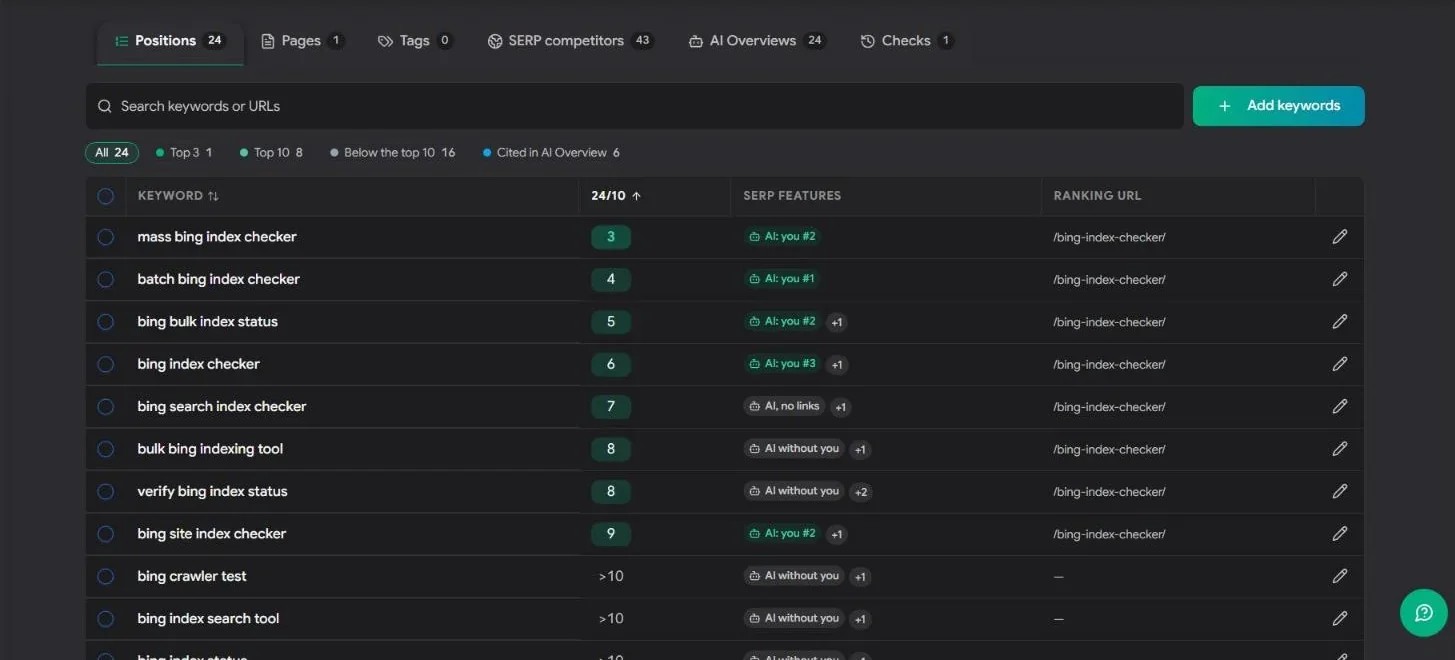
With pay-as-you-go you buy credits and spend them only when a check runs. SpeedyIndex launches its Rank Tracker on this model on 2 November 2026, inside the same app.speedyindex.com account used for indexing. A keyword at Top-10 depth costs 4 tokens. There’s no subscription and tokens don’t expire, so a quiet month costs nothing. Token packs start at $5, and 1,000 tokens cost from $1.00 (in the $5 pack) down to $0.33 (in the $500 pack), which works out to roughly $0.0013–$0.004 per keyword. From 2 November to 2 December 2026 the launch price is 2 tokens per keyword, and new accounts get 100 free tokens. Depth is where pay-as-you-go pricing needs a closer look. You can track Top-10, 30, 50 or 100, but pages beyond the first are loaded and paid for only while your site or a tracked competitor hasn’t been found. If you already rank on page one, a Top-100 setting doesn’t multiply the bill.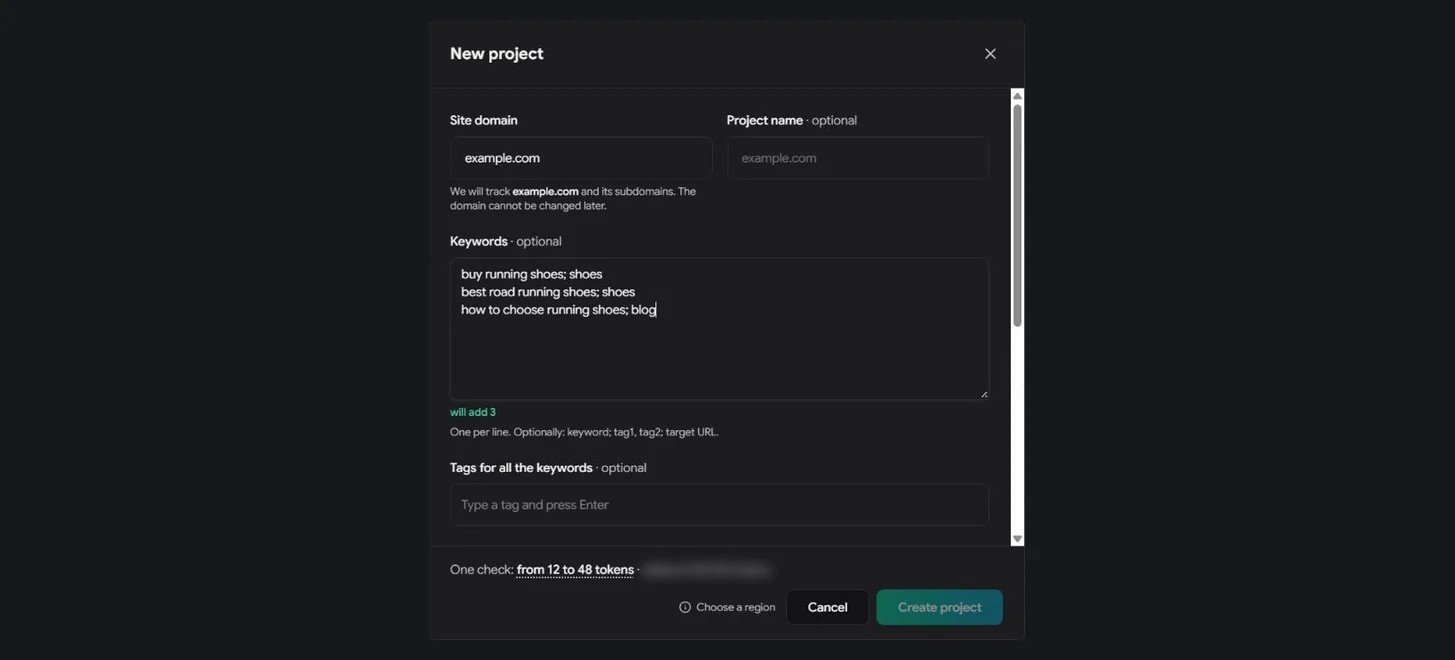
Worked examples: 50, 100 and 500 keywords
Using 4 tokens per keyword and $0.33–$1.00 per 1,000 tokens:
At the launch price of 2 tokens per keyword, halve every figure. Now set the same scenarios against flat fees:
- 50 keywords daily: one SerpRobot bot ($4.99) covers it. Pay-as-you-go costs $1.98–$6.00, so the answer depends on pack size.
- 100 keywords daily: two bots ($9.98) against $3.96–$12.00. SE Ranking Core would cost $0.043 per check at this volume.
- 500 keywords daily: seven bots ($34.93), Semrush's SEO plan ($139), or $19.80–$60.00 pay-as-you-go.
- Any weekly scenario: pay-as-you-go stays at $8 a month or less, while a subscription fee doesn’t shrink when you look less often.
When a subscription is the cheaper option
- You check daily and fill the quota. At 2,000 keywords a day, a $129 plan lands around $0.0021 per check. Small token packs at $0.004 per keyword lose that comparison; large packs at $0.0013 win it, but a $500 pack is an upfront commitment of its own.
- Your daily set is small and stable. A $4.99 plan for 75 daily keywords beats buying small packs for the same volume.
- You need data a pay-as-you-go tracker doesn’t collect, such as mobile rankings or local pack and Maps positions.
- You actually use the suite. If keyword research, site audits and backlink data replace other paid tools, the rank tracking inside a suite isn’t the expensive part.
When paying per keyword is the cheaper option
- Weekly or less frequent checks. Moving from daily to weekly cuts a pay-as-you-go bill roughly 7.5 times. A subscription bill stays the same.
- Small or uneven keyword sets: seasonal projects, a site migration you want to watch for a month, a client audit, a new site with 30 target queries.
- Gaps between projects. Credits that don’t expire carry over a quiet quarter; a quota that resets monthly doesn’t.
- You only need desktop Google rankings for a country or city, which covers many content and B2B sites.
What you give up without a subscription
A rank tracker without a subscription tends to be narrower, and you should know exactly where. SpeedyIndex’s tracker, for example, covers Google only and desktop results only. There’s no mobile SERP, no Google Maps or local pack tracking, no Bing or Yandex in the tracker, and no hourly checks. It isn’t a suite either: no keyword research, audits or backlink database come with the tokens. Desktop-only matters more than it sounds. Google’s in-depth guide to how Search works says relevance can depend on the user’s location, language and device, desktop or phone. Your position on a phone in another city can differ from what a desktop tracker records, and from what you see in your own browser. If most of your traffic is mobile and local, a plan with mobile and local pack tracking earns its fee. Search Console doesn’t close that gap for free. Its position figure is the topmost position your link held in each impression, averaged across queries, as described in Search Console Help. That’s useful for trends, but it isn’t your place on a specific results page in a specific region on a specific day, which is what a rank tracker records.A five-minute way to decide
- Count the keywords you’ll actually review, not the ones you might add someday.
- Decide how often you’ll act on the data. If you read reports weekly, daily checks are paid noise.
- Multiply keywords × checks per month × price per check for each option, and compare with the flat fee.
- List the data you can’t do without: mobile, local packs, other search engines. If one of them is on the list, that settles it.
- Re-run the sum every quarter. Keyword sets grow and shrink, and the cheaper model can switch with them.